

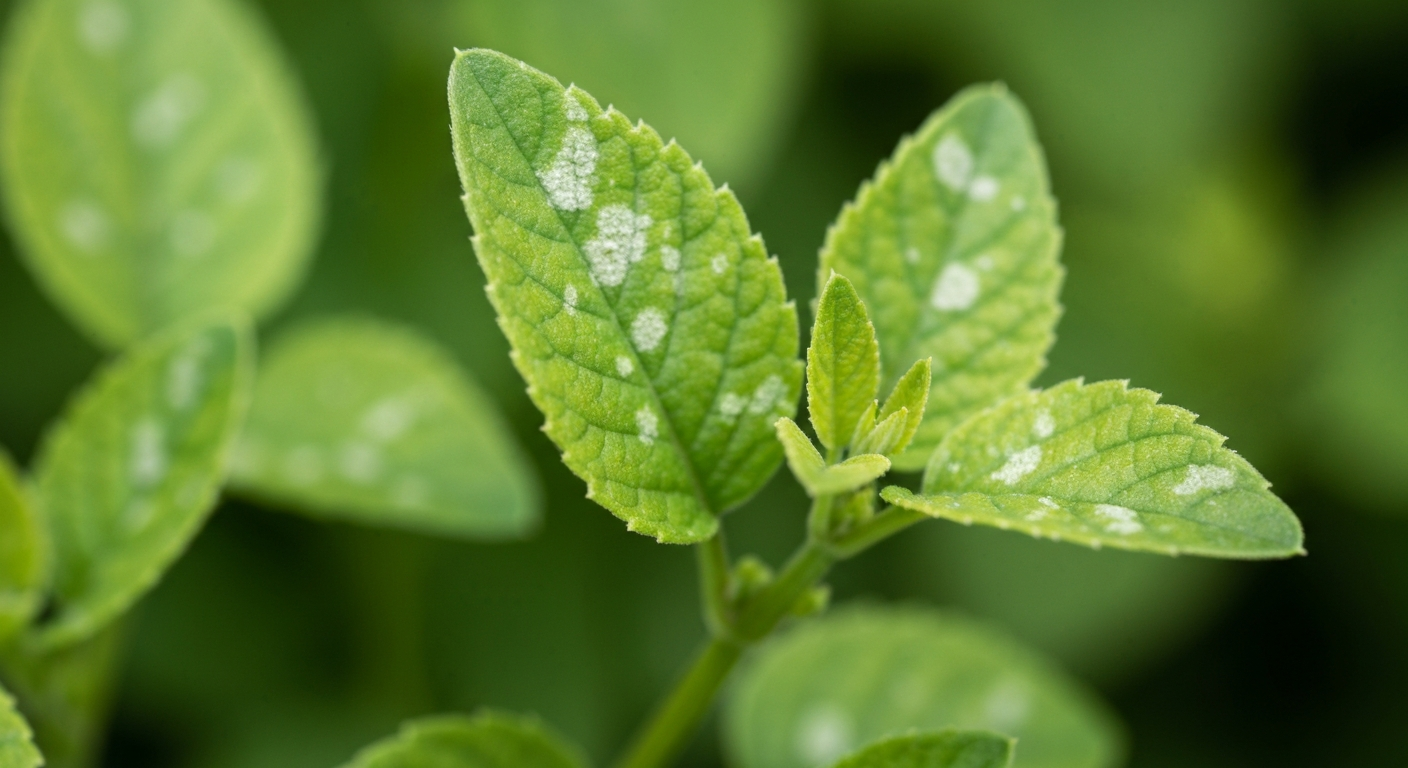
Powdery mildew on plants is one of the most recognizable fungal diseases in US gardens: white or grayish powder on leaf surfaces, sometimes starting as small circular colonies before coating entire leaves. Unlike many foliar diseases, classic powdery mildew often thrives when days are warm and nights are cool, with dry leaf surfaces but humid air around the plant. It hits cucurbits, roses, grapes, apples, and indoor favorites like begonias when airflow stalls.
Because the symptom is distinctive, gardeners search powdery mildew on plants hoping for fast confirmation and safe treatment. This guide covers symptoms and hosts, environmental causes, diagnosis steps, organic and chemical control, a prevention calendar, mistakes to avoid, and how to verify patches with the Plant Disease Identifier app. For tomato-specific outbreaks in humid greenhouses, also see tomato plant diseases; for general spotted leaves without powder, see leaf spot disease.
Why powdery mildew matters to your garden
Mildew is not merely cosmetic. Infected leaves curl, yellow, and dry prematurely, reducing photosynthesis when fruit and flowers need energy most. Severe infections on squash and pumpkin can shorten the harvest window; on grapes and apples, mildew stresses trees and may interact with other fruit diseases. Indoors, powder signals humidity and spacing problems that will invite leaf spot and pest issues next.
Early identification prevents bed-wide spread. Spores travel on wind and tools. One infected zucchini leaf can seed neighboring cucumbers if you work wet plants or crowd vines.
Symptoms: how to recognize powdery mildew on plants
Classic signs include:
- White to gray powdery coating on upper leaf surfaces (sometimes stems and flowers)
- Colonies that wipe off with a finger initially but reappear within days
- Curling, yellowing, then browning of heavily coated leaves
- Stunted or distorted new growth on severe indoor outbreaks
- Unlike downy mildew, traditional powdery mildew is primarily on tops of leaves; downy types often favor undersides and different weather
Photograph leaves in side light so powder casts shadows—ideal for human ID and plant disease identifier confirmation.
Host plants commonly affected
- Cucurbits: squash, pumpkin, cucumber, melon
- Ornamentals: roses, peonies, phlox, zinnias
- Fruit: grapes, apples, cherries in humid regions
- Indoors: begonia, calathea in stagnant humid rooms without fans
Species vary in susceptibility; resistant cultivars exist for some crops—check seed catalogs.
Causes and conditions that favor outbreaks
Powdery mildew fungi need living tissue but often dislike constant free water on leaves—hence the paradox of dry leaf surfaces with humid microclimates. Risk rises when:
- Plants are crowded and airflow is poor
- Nights are cool after warm days
- Greenhouses and bathrooms lack fans
- Overhead misting keeps humidity high without drying cycles
- Infected debris overwinter in mild climates
Shade can increase mildew on some species while full sun reduces it on others—know your plant’s preference before moving pots randomly.
Diagnosis steps before you spray
- Confirm powder location — tops vs. undersides; downy mildew management differs.
- Rule out dust and spray residue — wipe a spot; mildew returns, dust does not.
- Check spread pattern — isolated plant vs. whole row.
- Note weather — cool nights plus humid days classic in many regions.
- Photograph colonies at medium and macro distance.
- Run photo AI if species or strain is unclear.
- Inspect for secondary pests on weakened leaves.
If leaves show brown necrotic spots without powder, pivot to brown spots on plant leaves guidance.
Organic treatment for powdery mildew on plants
Start with culture—often enough for mild cases:
- Remove the most coated leaves; bag and trash, do not home-compost small piles of heavy infection.
- Increase airflow — fan indoors, wider spacing outdoors, prune congested rose interiors.
- Water soil mornings — reduce prolonged leaf wetness from overhead irrigation (while keeping root zones adequate).
- Apply labeled organic fungicides — sulfur, potassium bicarbonate, horticultural oils on tolerant species, neem in programs where label allows cucurbits or ornamentals.
- Repeat per label at first sign of new powder; coverage on undersides of curling leaves matters.
Milk dilutions and baking soda mixes appear in folklore; if you experiment, test one plant first—leaf burn on sensitive species is real.
Chemical treatment when appropriate
Conventional fungicides labeled for powdery mildew make sense when:
- Vegetable canopies are coating fast during fruit set
- Grape or apple production faces economic loss
- Organic rotations failed twice on the same planting
Choose products with explicit powdery mildew claims and follow REI/PHI on food crops. Rotate modes of action within the season to slow resistance—especially on grapes and roses sprayed repeatedly.
Prevention calendar
| Timing | Action |
|---|---|
| Planning | Select resistant cucumber and squash varieties where available |
| Planting | Space for mature size; stake vines early |
| Early summer | Scout weekly; photograph first white flecks |
| Midseason | Thin overcrowded beds after heavy rain; avoid working wet foliage |
| Indoors | Run fan on low; avoid misting leaves nightly |
| Fall | Remove infected plant residue; do not compost heavily coated vines |
Baseline photos in June simplify July comparisons in apps and journals.
Powdery mildew vs. downy mildew: do not mix treatments
Gardeners conflate “mildew” words. Powdery mildew (this article) typically coats upper leaf surfaces with dry white powder in warm-day/cool-night rhythms. Downy mildew on many crops favors different weather and often shows yellow angular patches with grayish growth primarily on undersides—cucurbits and grapes have famous downy strains. Product labels and extension bulletins differ; read the exact pathogen on the bottle.
Photograph both leaf surfaces when unsure. The Plant Disease Identifier app suggestions list multiple mildews—confirm with extension in high-value vineyards and organic market gardens.
Greenhouse and tunnel management
Protected culture accelerates mildew when vents close during cold nights. Automate minimum ventilation, circulate air with horizontal fans, and avoid overcrowding flats. Seedlings with early powder may outgrow mild infections after spacing—judgment call versus discard to protect the whole flat.
On patio cucumbers in pots, move containers to breezy locations and trellis vertically rather than letting vines sprawl on damp concrete. Market gardeners selling at farm stands should scout powdery mildew before peak harvest weeks—buyers notice coated leaves even when fruit looks fine, and early removal of coated vines protects reputation and neighboring U-pick rows.
Mistakes to avoid
- Spraying only the tops while leaves curl and hide undersides
- Composting heavily infected cucurbit vines in backyard piles
- Confusing downy mildew with powdery mildew—products and timing differ
- Applying oil sprays in peak heat on sensitive cultivars
- Ignoring airflow while increasing humidity for unrelated reasons
- Treating dust or kaolin clay residue as fungus
Organic program sequencing for powdery mildew
Run cultural fixes for three to seven days before judging organic sprays—sometimes spacing alone stalls mildew on porch pumpkins. When spraying, coat new growth because old coated leaves may already be senescing. Alternate actives if your organic program allows multiple FRAC groups on the label; repetition of one ingredient alone can fail on grapes by midseason.
Using the Plant Disease Identifier app
White patches are photogenic for AI. Use the Plant Disease Identifier app:
- Shoot coated leaves in indirect light with healthy green tissue visible.
- Compare app suggestions to downy mildew and mineral residue look-alikes.
- Save scans weekly during treatment to verify powder is retreating, not expanding.
Pair technology with spacing and sanitation—apps do not replace airflow.
Also read: protect tomato canopies in tomato plant diseases and learn spotted-leaf look-alikes in leaf spot disease.