

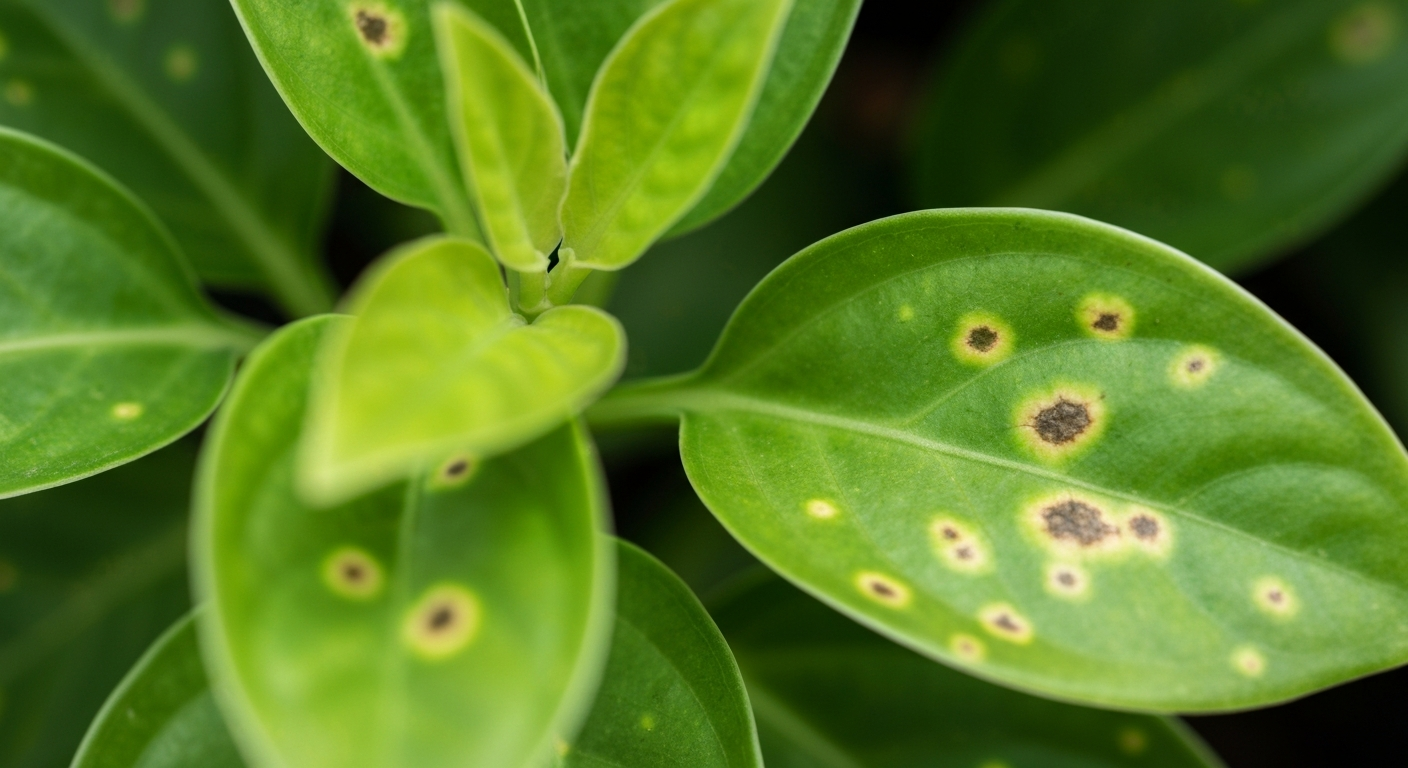
Leaf spot disease is the umbrella term gardeners use when foliage develops localized necrotic lesions—brown, black, or tan spots often ringed with yellow. Behind the label lie many fungi (Cercospora, Septoria, Alternaria) and some bacteria, each favored by moisture on leaves and crowded plants. For homeowners, stopping spread quickly matters more than naming the exact Latin pathogen on day one—though correct classification prevents useless sprays.
This guide explains fungal vs. bacterial symptoms, causes indoors and out, diagnosis steps, organic and chemical control, prevention calendars, mistakes to avoid, and pairing observations with the Plant Disease Identifier app. When spots are brown but etiology is unclear, read brown spots on plant leaves; for tomato-specific targets and septoria, see tomato plant diseases.
Why leaf spot disease spreads faster than you expect
Spores and bacteria move via splash, tools, hands, and wind in humid microclimates. One spotted pothos leaf can seed a shelf; one septoria-infected tomato lower leaf can rain spores onto peppers nearby. Leaf spot rarely kills mature trees instantly, but defoliation weakens plants and invites sunscald on fruit.
Early removal of the worst 20–30% of spotted foliage plus airflow often contains outbreaks without chemistry—if you act at first spot, not first yellow canopy.
Symptoms: fungal vs. bacterial leaf spot
Fungal leaf spot patterns
- Defined round or irregular necrotic centers
- Yellow halos on many hosts
- Concentric rings on some species (early blight on tomato)
- Dark fruiting bodies in centers (septoria dots visible with lens)
- Progress often lower leaves first outdoors
Bacterial leaf spot patterns
- Water-soaked, greasy appearance before browning
- Angular lesions bounded by veins on cucurbits and some ornamentals
- Rapid collapse in warm wet weather after wounding
Houseplant-specific signs
Indoor leaf spot frequently follows overhead watering + poor airflow. Spots appear on older leaves touching glass or crowded neighbors. Roots may still be healthy—unlike root rot wilting with wet soil.
Common causes and contributing factors
| Factor | Effect |
|---|---|
| Night-wet leaves | Extends infection windows |
| Overhead misting indoors | Keeps foliage damp |
| Crowded beds and shelves | Blocks drying |
| Infected debris | Overwinter inoculum on roses, tomatoes |
| Dirty pruners | Plant-to-plant transfer |
| Stress | Nutrient or light stress increases susceptibility |
Warm days with cool nights and high humidity favor many fungal leaf spots nationally.
Diagnosis steps for leaf spot disease
- Note spot shape and halos — rings and yellow halos favor fungus; greasy angular favors bacteria.
- Check progression — enlarging over 7–14 days vs. static after one event (scorch).
- Inspect undersides for pests causing stippling mimicking spot.
- Feel soil and examine roots if wilting present.
- Photograph with indirect light; include healthy margin.
- Run plant disease identifier when host is unfamiliar.
- Isolate symptomatic houseplants two weeks minimum.
Organic treatment and control protocol
- Isolate houseplants showing active spots.
- Remove worst 20–30% of affected leaves; bag debris.
- Sterilize tools — 10% bleach solution or alcohol between plants.
- Improve airflow — fan indoors; stake and space outdoors.
- Water soil mornings; avoid wetting foliage at night.
- Mulch vegetable soil to reduce splash.
- Apply fungicides only when fungal etiology is likely and label matches plant type (edible vs. ornamental).
Repeat scouting weekly until new growth emerges clean.
Chemical treatment when appropriate
Conventional fungicides help when:
- Vegetable canopies lose lower leaves during fruit development
- Roses face repeat defoliation alongside black spot on roses
- Organic sanitation failed on high-value specimens
Rotate active ingredients on tomatoes and roses. Respect pre-harvest intervals on food crops.
Houseplant vs. outdoor management differences
Indoors: Reduce misting; water soil directly; increase air with fan on low; quarantine new purchases; match water to winter slowdown.
Outdoors: Widen spacing; use drip; rotate crop families; destroy infected tomato and rose debris instead of small-scale composting.
Adjust fixes to environment—not every spotted fern needs the same product as a field tomato.
Common leaf spot pathogens by host (quick reference)
| Host | Spot character | Notes |
|---|---|---|
| Tomato | Small dark dots (septoria) or target rings (early blight) | See tomato plant diseases |
| Rose | Dark spots with yellow halos | Often black spot on roses |
| Zinnia, phlox | Circular tan/brown spots | Reduce overhead water |
| Hydrangea | Purple-edged spots in humid shade | Improve air |
| Peppers | Bacterial angular spots possible | Copper only if label allows |
Exact species names matter most to researchers; gardeners win by removing inoculum and drying leaves faster than spores germinate.
Recovery expectations after treatment
Expect no overnight miracle. Fungal leaf spot programs show progress when new leaves emerge clean for two to three weeks. Old spotted tissue does not green up—do not judge success by old leaves. On houseplants, rotate the pot a quarter turn weekly so all sides receive air. On vegetables, side-dress fertility only after canopy stabilizes—nitrogen on heavily defoliated plants can push soft growth vulnerable to new infection.
If spots continue on new growth after sanitation and labeled sprays, reconsider bacteria, virus, or abiotic causes via diagnose plant problems before repeating the same fungicide. Community plots with shared hoses should keep hose ends off soil and leaf litter—splash from the ground is a silent reinfection source that individual leaf removal cannot fix alone.
Prevention calendar
| Timing | Action |
|---|---|
| Year-round indoors | Quarantine; scout weekly; photograph baseline leaves |
| Spring planting | Space for mature size; mulch tomatoes |
| Summer | Scout after rain; thin overcrowded beds |
| Fall | Rake rose and vegetable debris |
| Tool care | Clean pruners between roses and tomatoes |
Mistakes to avoid
- Composting heavily spotted leaves at home
- Overhead watering ferns and pileas at night
- Spraying fungicide on sunburned patches
- Removing every leaf on a weak plant
- Ignoring pests because spots “look fungal”
- Using one chemical all season without rotation on tomatoes
Leaf spot and pollinator safety
When spraying fungicides on flowering garden plants, apply in late evening when pollinators are less active, or choose products with lower bee risk per label icons. Better yet, treat early before peak bloom on vegetables destined for heavy spray seasons. Leaf spot control that strips the entire canopy also removes flowers—balance sanitation pruning with keeping enough healthy leaves to support beneficial insects and fruit set.
Using the Plant Disease Identifier app
Leaf spots are among the most photographed symptoms. Use Plant Disease Identifier:
- Capture a leaf showing spot, halo, and healthy tissue in one frame.
- Review multiple AI matches—septoria vs. early blight vs. cercospora suggestions differ in care emphasis.
- Save dated results while you test sanitation for seven days.
Low confidence means revisit pests, moisture, and light before buying chemicals. Group houseplants by water needs so one overwatered fern does not create leaf spot pressure on neighboring calatheas sharing the same humid shelf.
Related: distinguish brown patch causes in brown spots on plant leaves and protect tomato canopies in tomato plant diseases.