

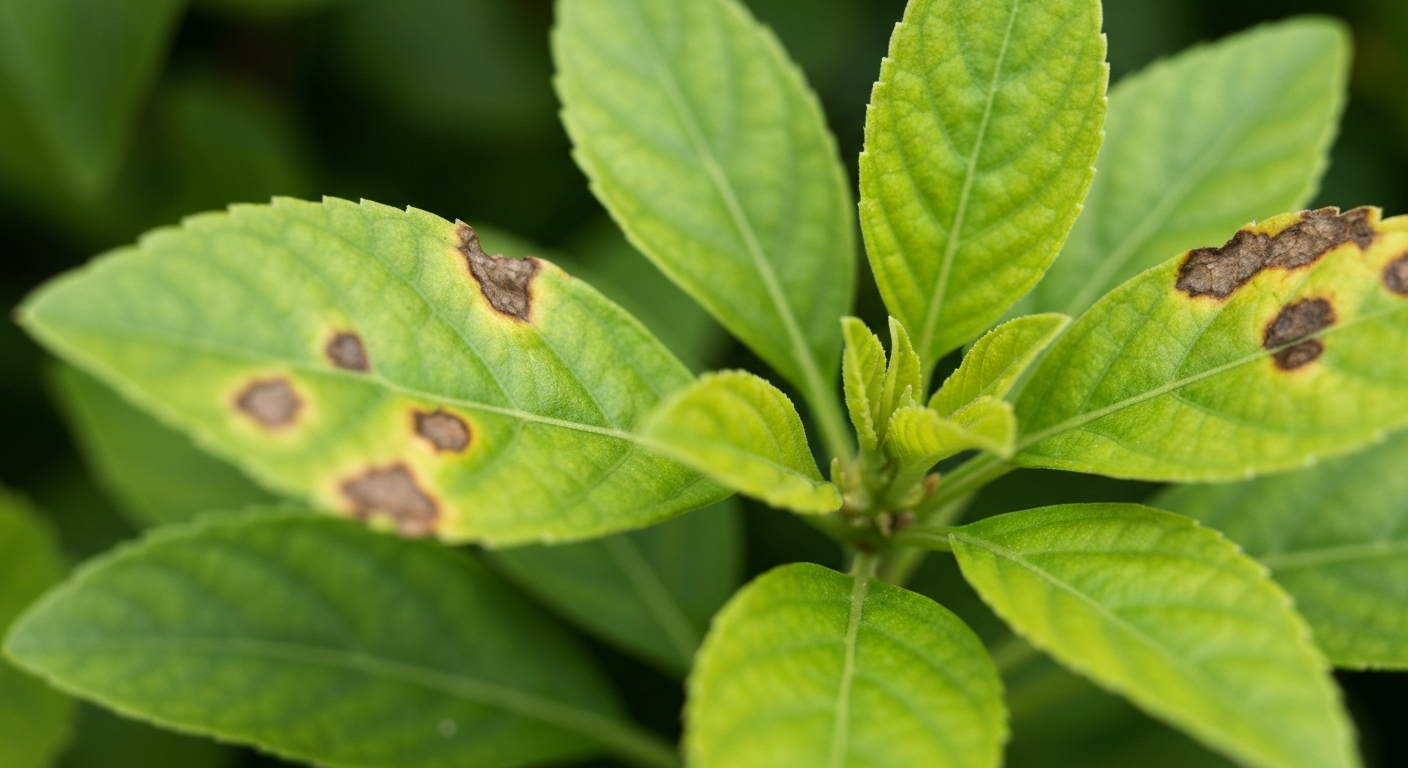
To diagnose plant problems accurately, you must combine careful observation, environmental history, and—when useful—photo-based AI. Skipping steps is why gardeners spray fungicides on sunburned leaves and add water to plants already dying from root rot. A structured method turns panic into a checklist you can repeat on houseplants, containers, and in-ground beds from Maine to Arizona.
This step-by-step guide presents the S.C.O.U.T. framework, symptom and cause tables, organic and chemical treatment boundaries, a prevention calendar, common mistakes, and how to use the Plant Disease Identifier app as one layer in diagnosis—not a substitute for looking at soil and roots.
Why structured diagnosis beats guessing
Every spotted leaf is not fungal leaf spot disease. Every wilting tomato is not blight. Misdiagnosis wastes product cost, delays real fixes, and can harm pollinators when sprays go out unnecessarily. Structured diagnosis also creates a record: dates, photos, and weather notes help you compare this July to last July on the same rose bed.
When you need vocabulary for pathogen types before treating, read plant disease categories first. When the plant simply “looks wrong” without a name, start with our sick plant decision tree, then return here for full workflow detail.
The S.C.O.U.T. method explained
S — Symptoms (what you see)
Document color, shape, size, and location:
- Margins vs. centers of leaves
- Upper vs. lower canopy
- One branch vs. entire plant
- Stems, fruit, or roots involved
Take one wide shot and one macro shot. Sharp macros matter for photo AI and for comparing to extension bulletins.
C — Context (what changed recently)
Recent repot, heat wave, cold snap, fertilizer application, pesticide drift, new grow lights, or construction dust can explain symptoms without any pathogen. Write the timeline: “spots appeared five days after I moved the fiddle leaf to the south window.”
O — Organism check (pests and signs of life)
Flip leaves. Look for webbing, honeydew, frass, exit holes, and mobile insects. Fungal structures include powdery patches, rust pustules, and dark fruiting dots in spots (septoria). If pests are present, treat pests before assuming pure fungus.
U — Underground (roots and drainage)
Slide the plant out if wilting conflicts with soil moisture. Healthy roots are firm and white or tan. Mushy brown roots with foul odor indicate root rot. No fungicide fixes drowning.
T — Test hypothesis (one intervention, then watch)
Choose the most likely fix—dry down schedule, pest soap, remove spotted leaves—and observe seven days. Spread supports disease or active pests; stability supports prior stress or successful correction.
Symptoms chart: disease vs. pest vs. culture
| Observation | Often disease | Often pest | Often culture |
|---|---|---|---|
| Powder on leaf tops | Powdery mildew | Rare | Dust (wipe returns clean) |
| Yellow halos around spots | Fungal leaf spot | Some mites | Nutrient if uniform |
| Webbing underneath | Secondary issues | Spider mites | — |
| Wilting, wet soil | Root pathogens | — | Overwatering |
| Angular greasy spots | Bacteria | — | — |
| Mosaic on new growth | Virus | — | Sometimes light |
Use brown spots on plant leaves when lesions are the main symptom but the cause is unclear.
Common causes by garden zone and season
Humid Gulf and Southeast summers: Fungal leaf spots, blights, and mildews thrive with warm nights and wet foliage.
Midwest: Tomato early blight and septoria after rain; rose black spot in prolonged wet springs.
Dry Southwest: Sun scorch and salt stress mimic disease; irrigation timing dominates.
Indoors nationwide: Overwatering, low light, and mite outbreaks in heated winter air.
Match diagnosis to your microclimate—patio pots dry faster than shaded beds.
Diagnosis steps: full workflow checklist
- Do not treat yet — note symptoms and date.
- Check soil moisture at two-inch depth.
- Inspect undersides for pests with phone flashlight.
- Review last 30 days — repot, feed, move, prune, weather.
- Photograph lesions with indirect light.
- Run plant disease identifier if fungus or virus suspected.
- Examine roots if wilting with wet soil or stagnant growth.
- Rank hypotheses — top two only.
- Apply one cultural or labeled treatment path.
- Reassess day 7 — reshoot photos if changed.
Escalate to county extension when commercial value is high, symptoms accelerate despite correct care, or lab confirmation is required.
Organic treatment after you diagnose
Once diagnosis points to fungus:
- Remove worst 20–30% of infected foliage; bag debris.
- Improve airflow and morning-dry leaves.
- Mulch soil under splashing crops.
- Use sulfur, copper, bicarbonate, or neem only if label matches plant and problem.
For pests diagnosed:
- Insecticidal soap or horticultural oil on tolerant species; repeat per label.
- Isolate houseplants until clean new growth appears.
For cultural issues:
- Fix water and light before any spray.
Chemical treatment when diagnosis is confident
Apply conventional products when:
- Wet weather threatens defoliation on roses, fruit, or tomatoes
- Harvest window requires protecting remaining canopy
- Organic program failed on confirmed fungal issue
Read REI, PHI, and plant-specific restrictions. Rotate active ingredients on tomatoes and roses to slow resistance.
Prevention calendar: diagnose less by preventing more
January–February: Plan rotations; order resistant cultivars; sharpen tools.
March–April: Clean beds; set drip; space transplants for mature size.
May–August: Weekly scout; photograph first spot; avoid working wet plants.
September–October: Remove infected debris; note problem locations in journal.
Indoors: Quarantine new plants; match water to seasonal growth slowdown.
Building a home diagnosis kit
You do not need a laboratory to diagnose plant problems well at home. Assemble:
- Hand lens (10x) — see septoria fruiting bodies and mite stippling
- Moisture meter or honest finger test — resolve wilting conflicts fast
- Notebook or phone album — dated photos per plant
- Sharp bypass pruners and alcohol wipes — sterile samples when pruning test leaves
- Reference links — extension PDFs for your state plus this site’s plant disease primer
When a case stumps you, bag a symptomatic leaf in a zip bag (not sealed airtight long-term) and visit a local nursery manager or extension desk with photos and your S.C.O.U.T. notes. Structured notes get better answers than “my plant is dying.”
When to escalate beyond home diagnosis
Escalate if: symptoms spread to multiple unrelated species in one week despite fixes; stems girdle or ooze; commercial nursery stock is involved; you need official documentation; or food safety questions arise on market vegetables. Lab fees are modest compared to crop loss on small farms.
For most homeowners, seven-day reassessment after a focused intervention prevents both neglect and panic spraying. Teach family members not to “help water” without checking soil—well-meaning extra cups are a top cause of misdiagnosed sick plants in shared households.
Mistakes that break diagnosis
- Treating from memory of last year’s problem on a different plant
- Ignoring soil moisture because leaves “look thirsty”
- Using phone flash that washes out yellow halos in photos
- Applying multiple unrelated products same day
- Composting infected rose leaves
- Trusting AI without checking roots or pests
Using the Plant Disease Identifier app in your workflow
After S.C.O.U.T. steps S and O, add technology:
- Download Plant Disease Identifier on iPhone.
- Capture affected tissue plus healthy margin in one frame.
- Read all suggested matches, not only the first.
- Compare app text to your moisture and pest findings.
- Save scans dated to your garden journal.
Low confidence means gather more data—do not spray blindly.
Related: name outbreaks faster with plant disease identifier photo AI, or separate a struggling specimen with the sick plant guide.